Mini Crown Embroidery: A Practical Review for Real Projects
Whenever I’m reviewing an embroidery design for potential use in my work or for my clients, I look beyond the initial charm. I think about how it will actually stitch out, where it will look best, and what kind of practical magic it can bring to a finished product. Today, I’m looking at the Mini Crown design, a motif that promises to make any fabric seem "exquisite and royal." That’s a lovely sentiment, but let’s see if it holds up under the needle.
First Impression: More Than Just a Little Princess's Birthday
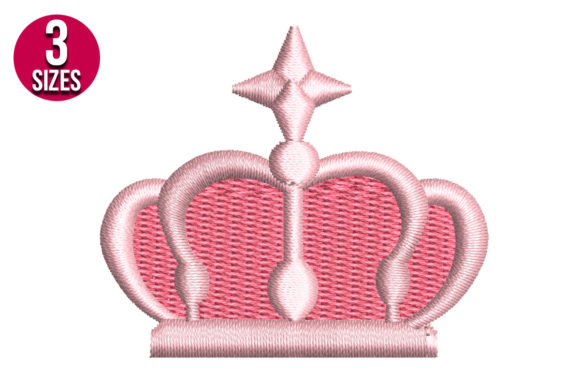
The immediate appeal of this mini crown is its delicate authority. It’s not a sprawling, heavy regal symbol; it’s a compact, confident badge of honor. The shape suggests a classic, slightly ornate tiara, which creates a mood of special occasion and gentle celebration. While the provided description mentions a little princess’s birthday outfit—a perfect fit—this design’s visual personality feels broader. It whispers "celebrated" rather than shouts "royalty." I immediately thought of it not just for birthday dresses, but for personalized gifts marking achievements, for holiday embroidery on stockings or tree ornaments, or as a subtle branding element for a boutique with a whimsical name. The detail level appears balanced—enough to feel intricate, but not so dense that it would become a puckered mess on lighter fabrics.
Where The Mini Crown Stitches Its Magic
In real-life embroidery project situations, this design’s scale is its greatest strength. Imagine applying it to the corner of a custom apparel item like a high-quality sweatshirt embroidery or a soft cotton tee for a special event. It would act as a perfect, understated accent. On tote bag design, it would elevate a simple canvas bag into a unique, giftable item. For baby embroidery, it’s ideal for a christening gown corner or a delicate blanket label. As an embroidered patch, it could be applied to a cap, a pillow cover, or a kitchen towel to create a cohesive line of small shop products.
I recently considered it for a client project: a set of linen tea towels intended as a wedding gift. The bride’s nickname was "Queen," and a single, small Mini Crown embroidered on each towel was the perfect, personal touch. It felt more sophisticated than a large motif and added tangible product value without overwhelming the fabric’s texture. This is where a design like this proves its worth—it enhances handmade presentation and boosts giftability through thoughtful subtlety.
Projects That Demand A Careful Approach
No design is universally perfect, and practical judgment means knowing its limits. The Mini Crown, with its likely fine lines and small details, requires careful application on certain items. On very textured fabrics like some sweaters or boucle, the clarity of its shape might get lost. On thin fabric or stretchy fabric like jersey, aggressive stitch density in its fill areas could lead to distortion; a robust stabilizer strategy is non-negotiable here.
Embroidering it on dark fabric demands smart thread color choices—a metallic or bright white would pop, but a poorly chosen mid-tone might disappear. Applying it to curved surfaces like caps requires testing to ensure those potentially delicate points don’t get compromised by the hat’s shape. For products needing frequent washing, like children’s apparel, you’d want to ensure the design’s small elements are stitched securely to withstand wear. The design’s strength is in its detail, so preserving that detail is key to maintaining customer trust and professionalism in your finished work.
Turning a Digital File into a Trusted Product
As a digital embroidery file, the Mini Crown is a design asset. Its real-world impact on visual appeal and stitching clarity depends entirely on how you, the maker, handle it. For craft business owners and Etsy sellers, this design can create consistency across a line of holiday gifts or baby clothes. For apparel decorators, it offers a quick, recognizable accent that elevates a basic item. That recognition factor aids buyer engagement in your Etsy listings or craft fair products—it’s a clear, charming symbol people understand instantly.
Whether you’re using it for personalized products or commercial embroidery, the design’s success hinges on preparation. Always test the design on scrap fabric first, using the same material and stabilizer as your final project. Check thread color contrast against both light and dark backgrounds. Review stitch density by looking at the sewn sample—are the fill stitch areas too thick? Are the running stitch outlines clean? Confirm hoop size suitability; a mini design might still require a certain minimum hoop for stability. Inspect small details like the crown’s tiny points or decorative accents to ensure they stitch out crisply.
A Final Note for The Practical Maker
Before you run this design for a client or add it to your shop, do your due diligence. Since the provided information mentions it comes with "multiple emb," I’d advise you to understand what that includes—different file formats? Variations? This is crucial for machine embroidery design compatibility. Create black and white mockups to see it as a graphic, and compare light and dark fabric backgrounds in your printable mockups to judge its versatility. Most importantly, confirm licensing before selling finished items or digital products. Knowing whether it’s cleared for commercial projects is essential for your brand consistency and legal peace of mind.
The Mini Crown isn’t just a cute file. When stitched with care onto the right project, it becomes a mark of celebration. It turns a simple tote bag into a gift, a plain apron into a boutique product, and a baby’s blanket into a cherished heirloom. That transformation—from digital file to exquisite, real-world texture—is where the true royalty lies.