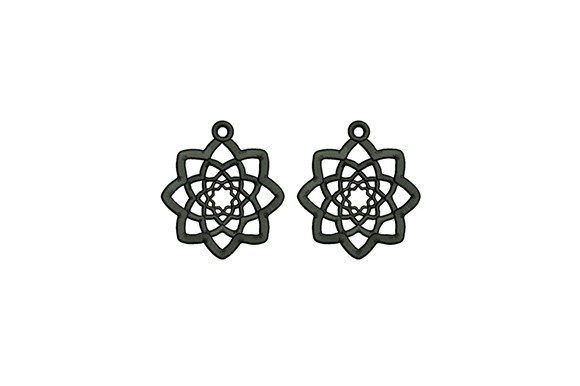
Grey Star Earrings: An Embroidery Designer’s Honest Review
Whenever I’m considering a new embroidery design for my work or for my small shop, the first question I ask isn't about stitch counts or file formats. It’s simpler: does this design have a clear, usable personality? The Grey Star Earrings design, at first glance, presents a wonderfully balanced answer. It feels elegant and geometric, a modern take on classic star motifs. The arrangement suggests jewelry but in a stylized, almost architectural way. This isn’t a loud, flashy piece; it’s sophisticated and understated, creating a mood of clean, contemporary craft. That personality tells me immediately where it belongs: on items where subtle detail matters, like a minimalist tote bag, the cuff of a sleek sweatshirt, or as a delicate accent on a baby’s knit blanket.
The Real-World Stitching Scenario: A Boutique Tote Bag
Let’s walk through a typical use case. Imagine I’m preparing a custom embroidered tote bag for a client’s small boutique. They want something unique but not overpowering—a signature touch. I load the Grey Star Earrings embroidery file and my immediate thought is about scale and placement. This design, with its interconnected lines and negative space, would shine on a flat, stable surface like canvas or heavy cotton. The elegance of the blackwork-style stitching would translate into a crisp, professional-looking finish. I’d consider stitching it in a classic black thread for maximum contrast, or perhaps a charcoal grey to soften it, placing it centrally or as a paired set on either side of the bag. The result would feel intentionally handmade, elevating the product’s perceived value without screaming “craft.” That’s the kind of visual appeal that builds customer trust and brand consistency.
Where This Design Performs Brilliantly
The product description suggests t-shirts, sweatshirts, jackets, vests, and more, and I agree with that breadth. This machine embroidery design would be exceptionally versatile for:
- Custom apparel like minimalist t-shirts and hoodies where the design acts as a standalone graphic.
- Accessories such as tote bags, aprons, and pillow covers, adding a branded or decorative accent.
- Personalized gifts like tea towels or blanket corners, offering a geometric yet gentle touch.
- Small business merchandise for Etsy listings or craft fair products, where clear, professional embroidery enhances buyer engagement.
- Digital product previews and printable mockups for those selling the design itself as a commercial embroidery asset.
The layout isn’t overly dense, which suggests it should stitch out cleanly on a variety of bases, provided you use the right stabilizer for the fabric.
Careful Considerations for a Clean Finish
No design is universally perfect, and practical judgment means acknowledging where extra care is needed. With its likely fine lines and detailed corners, the Grey Star Earrings design requires a thoughtful approach on:
- Small hoop sizes – Ensure the chosen area fits comfortably within your hoop to prevent distortion.
- Textured or stretchy fabrics like certain knits; a solid stabilizer strategy is crucial here.
- Dark fabrics – While the description mentions “blackwork,” contrast is key. Test thread colors; a silver or light grey might be necessary on dark backgrounds.
- Curved surfaces like caps. The geometric symmetry might need careful placement to look balanced on a curved plane.
- Products needing frequent washing – Good stitch density and secure stitching will ensure longevity on items like kitchen towels or baby clothes.
The elegance of the design depends on stitching clarity. Muddy details would undermine its entire visual personality.
Practical Notes From the Hoop
Before I ever stitch this onto a final product, my process is routine but vital. For the Grey Star Earrings design, I would:
- Test on scrap fabric first, using the same material as my final project (like canvas for a tote or jersey for a tee).
- Check thread color contrast thoroughly on both light and dark fabric backgrounds. A quick black-and-white mockup in software can help visualize this.
- Review the stitch density in the file preview to anticipate any overly dense areas that might pucker on thin fabric.
- Confirm the hoop size needed and inspect how the small details render at that scale.
- Use proper stabilizer – for a design like this, I’d lean toward a firm cutaway for stretchy fabrics and a medium-weight for stable ones.
- Clarify licensing if I plan to sell the finished items or use it in commercial embroidery projects. The product description doesn’t specify, so it’s a necessary step to check before business use.
These steps turn a beautiful digital embroidery file into a reliable, high-quality finished product.
The Final Impression: Giftability and Professionalism
When I evaluate a design for my craft business, the end-user’s reaction is the final metric. The Grey Star Earrings design, stitched well on an appropriate item, speaks of thoughtfulness. It feels giftable—perfect for a wedding gift, holiday present, or nursery decor because it’s decorative but not thematic or gender-specific. Its handmade presentation is clean and intentional, which supports professionalism for apparel decorators and creative entrepreneurs. For an Etsy seller, this kind of design can become a signature piece, recognizable and consistent across a product line. It doesn’t try to do everything; it does a specific, elegant thing very well. That’s the kind of embroidery design asset that, with practical care and realistic application, turns seamlessly from a digital file into a beloved physical product.